 Dunedin Polyaspartic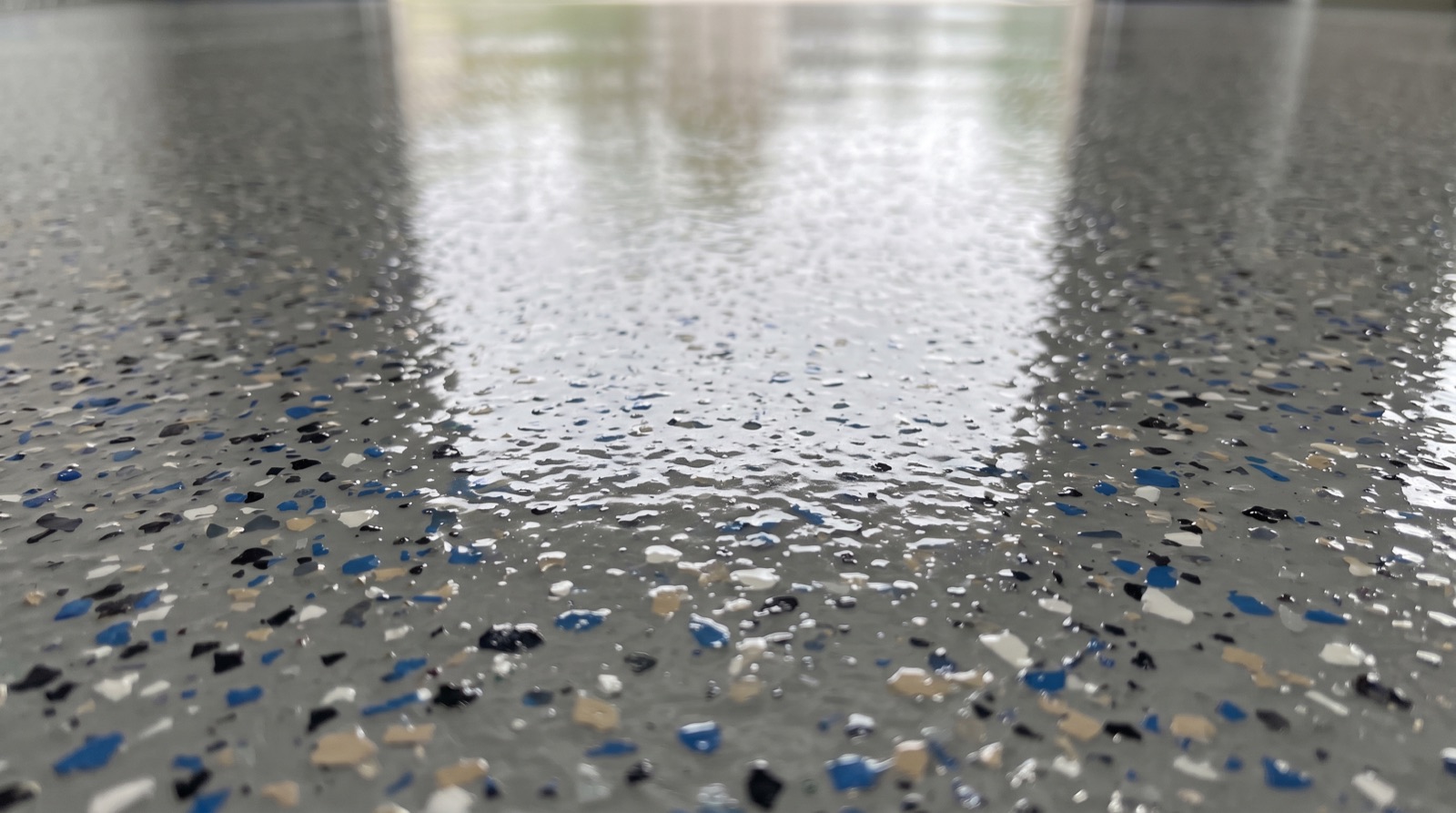
The Chemistry, Simplified
Polyaspartic coatings are a type of aliphatic polyurea, made by reacting a polyaspartic ester with an aliphatic isocyanate. That's a technical way of saying: it's a two-part coating where a resin and a hardener are mixed on-site and react quickly to form a hard, plastic-like surface bonded to the concrete below.
Traditional garage floor epoxy is also a two-part system, but it relies on a different chemical reaction — one that happens much more slowly. Polyaspartic chemistry was originally developed for industrial and automotive coatings where a fast, durable cure was the priority, and that same chemistry has become popular for residential garage floors.
The Speed Factor
Why It Cures So Much Faster Than Epoxy
Epoxy cure times are driven by a relatively slow-reacting amine-based hardener. Depending on temperature and humidity, epoxy floors often need 24 to 72 hours of cure time before they can be walked on, and up to a week before a vehicle should be parked on them.
Polyaspartic's reaction chemistry moves much faster. Many polyaspartic systems are formulated to reach a walkable state within hours rather than days, which is why installers can often complete floor prep, base coat, and topcoat in a single visit. That speed doesn't come from skipping steps — it comes from the underlying resin reacting faster at the molecular level.
UV Stability and Why It Matters in Florida
Not all floor coatings hold their color under sunlight. Standard epoxy resins are prone to a chemical process called UV degradation, where prolonged sun exposure breaks down the resin's molecular structure and causes yellowing, chalking, or fading over time — even in a garage that only gets indirect light through a door opening.
Polyaspartic (aliphatic polyurea) coatings are inherently more UV-stable than standard epoxy because of the type of isocyanate used in the reaction. That stability is one of the main reasons polyaspartic has become popular in Gulf Coast climates like Dunedin's, where garages can see long stretches of intense sun, high humidity, and heat for much of the year.
In Practice
What This Means for a Garage Floor
Faster Turnaround
A single-day install (in many cases) means less disruption to your garage and daily routine.
Better Color Retention
Greater UV resistance helps the finish look consistent over years of Florida sun rather than yellowing prematurely.
Wider Temperature Tolerance
Many polyaspartic formulations can be applied across a broader range of temperatures and humidity levels than standard epoxy, which matters in a humid coastal climate.
Next Step
Curious If Polyaspartic Is Right for Your Garage?
Send us a few details and we'll help connect you with a qualified local installer.
Request a Free Quote