 Dunedin Polyaspartic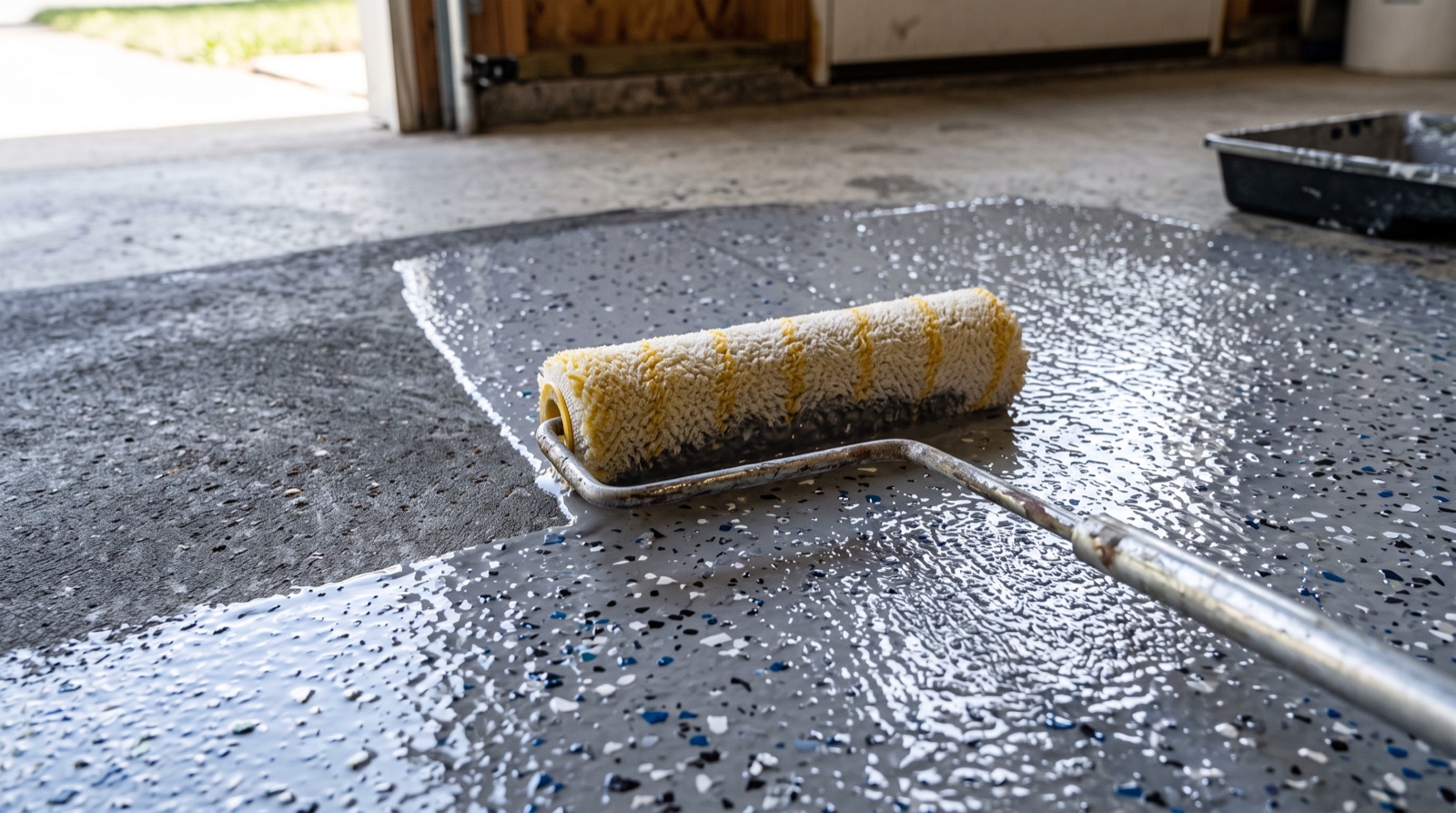
- Concrete Inspection & Prep
Installers typically start by inspecting the slab for cracks, moisture issues, or previous coatings that need to be addressed. Proper prep is what a coating bonds to, so this step matters as much as the coating itself.
- Mechanical Grinding or Shot Blasting
Rather than acid etching, most professional polyaspartic installs use mechanical diamond grinding or shot blasting to open the concrete's surface pores and remove contaminants, creating a clean profile for the coating to bond to.
- Crack & Joint Repair
Visible cracks and control joints are typically filled or repaired before coating begins, since they'll telegraph through a finished floor if left untreated.
- Base Coat Application
A base coat of the polyaspartic (or a primer, depending on the system) is rolled or squeegeed across the prepped concrete.
- Decorative Flake or Chip Broadcast (Optional)
If a homeowner chooses a flake or chip finish, it's broadcast into the wet base coat at this stage, before the topcoat is applied.
- Topcoat & Fast Cure
A clear polyaspartic topcoat is applied for durability and sheen. Because polyaspartic chemistry reacts quickly, this stage — and the whole installation — can often be completed within a single day, though final full cure and vehicle-ready timelines still vary by product and conditions.
Worth Knowing
Why Speed Doesn't Mean Skipping Steps
It's a common misconception that a fast-curing coating means a rushed job. In practice, the speed advantage of polyaspartic comes from the resin chemistry itself, not from skipping prep work. Grinding, crack repair, and proper base coat application still take the time they need — the coating simply cures faster once it's down.
This general process reflects how polyaspartic installation typically works across the industry. It is not a description of any specific crew's proprietary method, and actual steps, materials, and timelines will vary by installer and by the condition of your slab.
Next Step
Want to Know What Your Garage Floor Needs?
Share a few details and we'll help connect you with a qualified local installer who can assess your specific floor.
Request a Free Quote